



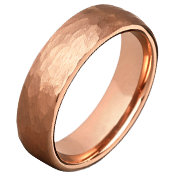
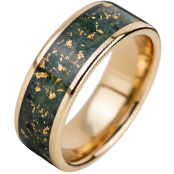







Introduction: The Manufacturing Mystery Unlocked
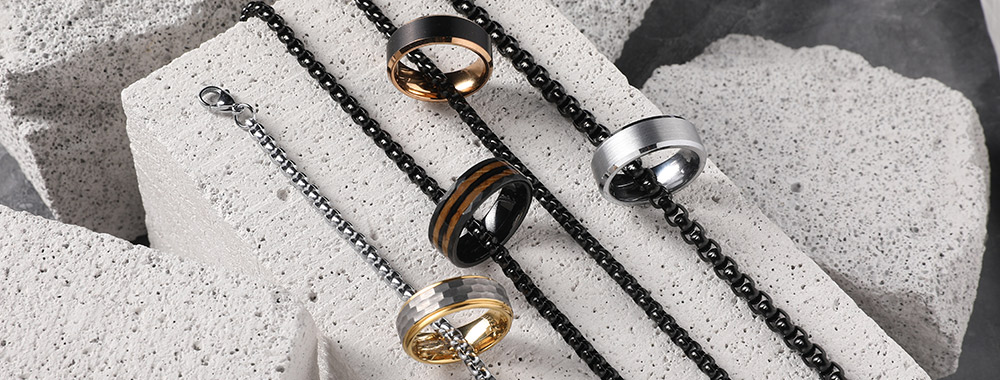
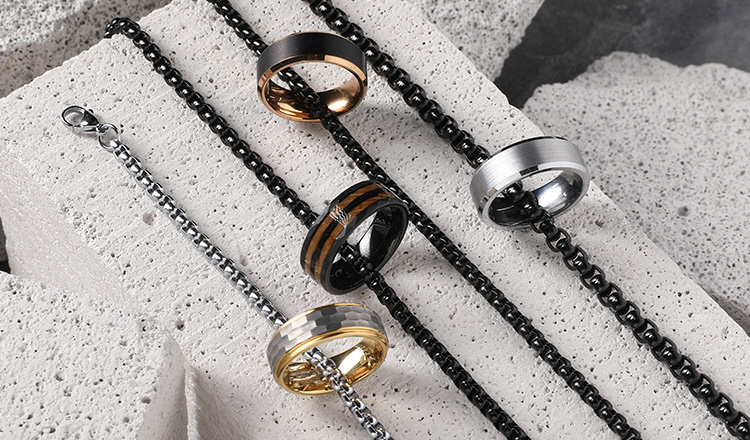
Tungsten Carbide has rightfully earned its title as the ultimate modern material for bagues pour homme et les alliances en tungstène. It stands as one of the hardest compounds on Earth, boasting durability that is four times greater than titanium, unmatched scratch resistance, and a permanent, high-luster shine.
But this very durability introduces a fascinating manufacturing enigma: How are les bagues en tungstène made if the metal is too hard to be cut by conventional tools and possesses an almost impossibly high melting point (over 6, 192° F or 3, 422°C)?
The answer lies not in a jeweler’s melting pot, but in the realm of high-tech engineering. Unlike soft metals like gold or silver, which are melted and cast, tungsten rings are forged through a complex, precise process called Powder Metallurgy. This unique approach is the reason why your tungsten wedding band possesses such remarkable density, durability, and a lifetime warranty against scratching. Here is a deep dive into the fascinating, multi-step journey.
Part 1: The Foundation—Tungsten Carbide, Not Pure Tungsten
Before discussing the process, it’s essential to clarify the raw material. When you purchase a tungsten ring, you are not wearing pure tungsten; you are wearing Tungsten Carbide (WC). This distinction is critical to the ring’s final performance and hardness, which is measured between 9 and 9.5 on the Mohs scale (second only to a diamond, which is 10).
The Composite Chemistry
● Tungsten (W): A pure element with the highest melting point of all known metals.
● Carbon (C): Non-metal element.
● Tungsten Carbide (WC): The result of tungsten and carbon atoms bonding. This compound achieves the extreme hardness that defines the ring.
● Binder Metal (Nickel or Cobalt): Since WC powder is too brittle, a binder metal (usually corrosion-resistant Nickel) is mixed in. The binder acts as a “glue” to hold the super-hard carbide particles together, allowing the ring to be shaped and ensuring its overall durability.
This precise mixture forms a high-performance ceramic alloy designed for jewelry.
Part 2: The Core Manufacturing Process—The Four Stages of Powder Metallurgy
Because Tungsten Carbide cannot be melted and poured, it must be created by fusing the microscopic powder particles together. This technique, Powder Metallurgy, requires specialized equipment and extreme control.
Stage 1: Blending and High-Pressure Compaction (The “Green State”)
1. Meticulous Mixing: Ultra-fine Tungsten Carbide powder and the binder metal powder are measured and blended to ensure uniform composition.
2. Molding: The composite powder is poured into high-pressure steel molds that form the basic cylindrical ring shape.
3. Compaction: The mold is subjected to immense hydraulic pressure (often thousands of pounds per square inch). This pressure tightly compacts the powder into a highly dense, yet still fragile, structure known as the “green state” ring blank.
Stage 2: Sintering (High-Temperature Fusion)
The compressed blanks are then transported to a specialized, low-oxygen, high-temperature sintering furnace.
1. Extreme Heat: The blanks are heated to temperatures often exceeding 2, 200° F (up to
2. 6, 0oo° F for some processes). This heat causes the Nickel binder to liquefy and flow around the solid WC particles.
3. Cohesion: The binder metal fuses the rigid Tungsten Carbide particles together, creating a solid, high-density alloy structure. This process results in significant shrinkage (up to 20%) and is responsible for the ring’s incredible non-porosity and structural integrity.
Stage 3: Diamond Machining and Shaping
The resulting sintered rings are now fully hardened and cannot be shaped by standard jewelry tools. They require specialized industrial equipment.
1. Diamond Tooling: Highly precise lathes equipped with diamond-tipped cutters are used for all shaping. These diamond tools are the only material hard enough to effectively cut the tungsten carbide.
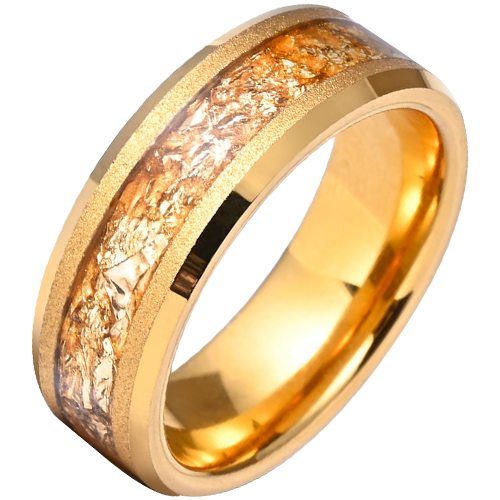
2. Shaping: Technicians meticulously cut the desired features: the inner comfort fit curve, the outer dome, beveled edges, or the precise channels required for inlays (like wood or meteorite). This process is slow and controlled due to the material’s brittleness.
Stage 4: Polishing and Finishing
The final steps reveal the ring’s brilliant aesthetic appeal and long-lasting quality.
1. Diamond Polishing: The ring is polished through multiple stages using progressively finer diamond polishing paste. This is a non-negotiable step; standard polishing compounds are ineffective. Tungsten’s density ensures it takes on a brilliant, permanent mirror shine. It will never require re-polishing.
2. Customization: If required, the final ring is personalized using high-powered Fiber Optic Laser Engraving. This precision method ensures the inscription is permanent and does not compromise the ring’s structure.
Conclusion: Why the Process Defines the Product
Understanding how tungsten rings are made confirms their enduring value and unique position in the jewelry market. The demanding process of Powder Metallurgy ensures you are receiving a bague homme that is:
● Permanently Hard: Rated 9–9.5 on the Mohs scale, it resists scratches better than any traditional metal.
● Permanently Lusterous: It will never tarnish, fade, or require replating.
● Engineered for Life: Forged by immense pressure and heat, it is a truly modern, resilient symbol of your commitment.
This unique manufacturing process ensures that your alliance en tungstène is as resilient, enduring, and permanently brilliant as the commitment it represents.
Ready to explore our collection of rugged, enduring tungsten wedding bands?