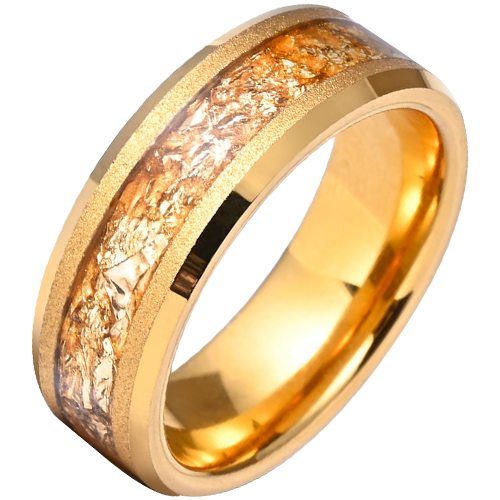




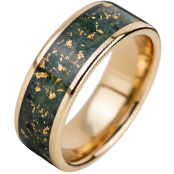








Introduction: Molecular Foundations of Durability
Material selection for 男戒 has evolved into a rigorous exercise in material science. Based on 2025 Q4 jewelry metallurgy feedback, the market remains bifurcated between high-density refractory metals and ultra-lightweight aerospace alloys. Understanding the molecular bond strength of 鎢 Carbide (WC) versus the passivating oxide layer of 鈦 is essential for selecting a lifetime prosthetic.
Because the atomic radius of Tungsten (W) is significantly larger than that of Titanium (Ti), the resulting density dictates not just weight, but the very method of industrial fabrication. The gravitational “heft” of the final product is a direct result of these disparate atomic masses. This structural divergence informs every aspect of long-term wearability and maintenance.
Physical Constants and Structural Integrity
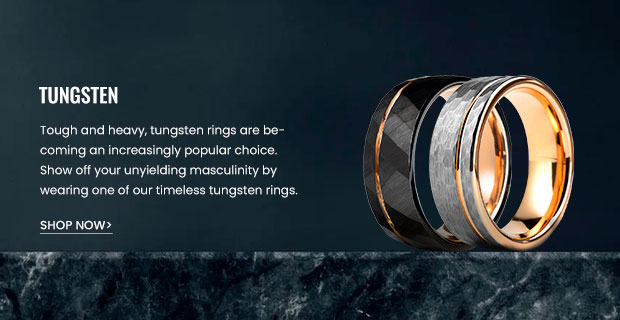
The primary differentiator between 碳化鎢 和 Grade 5 Titanium (Ti-6Al-4V) lies in their atomic lattice structures. Because 碳化鎢 utilizes a hexagonal close-packed (HCP) lattice with Carbon (C) atoms occupying interstitial sites, it achieves a Mohs Hardness of 8.5 to 9.0. This specific molecular arrangement ensures that the material remains virtually impervious to surface deformation during daily friction tests.
相比之下、 鈦, specifically the Ti-6Al-4V alpha-beta alloy, prioritizes strength-to-weight ratios over surface hardness. While 鈦 achieves a Vickers Hardness (HV) of approximately 340, it cannot match the 1600 HV rating of 鎢. However, during laboratory fatigue tests governed by ASTM B348 standards, 鈦 demonstrates superior fracture toughness.
Because of its ductile metallic bonding, 鈦 will exhibit a 0.012mm micro-wear tolerance under stress rather than experiencing catastrophic failure. This energy-absorption capability allows the metal to deform slightly rather than shatter. In high-impact scenarios, the modulus of elasticity in 鈦 provides a safety buffer that rigid carbides lack.
Hardness vs. Resilience: Tungsten Carbide utilizes interstitial carbon bonding to achieve a Mohs 8.5 surface, while Grade 5 Titanium relies on its Ti-6Al-4V alloy structure for superior fracture toughness.
Deformation Standards: Laboratory ASTM B348 testing confirms that Titanium sustains a 0.012mm micro-wear tolerance, whereas the rigid HCP lattice of Tungsten prioritizes zero surface scratching.
Refractory vs. Aerospace Alloys
Technical Metric | Tungsten Carbide (WC) | Grade 5 Titanium (Ti-6Al-4V) | Variance Delta (%) |
Density (Specific Gravity) | 15.63 g/cm³ | 4.43 g/cm³ | Tungsten +252% |
莫氏硬度計 | 8.5 – 9.0 | 6.0 | Tungsten +45% |
Vickers Hardness (HV) | 1600 HV | 340 HV | Tungsten +370% |
Tensile Strength (MPa) | 344 MPa | 860 – 900 MPa | Titanium +155% |
Melting Point | 3,422°C | 1,668°C | Tungsten +105% |
Elastic Modulus (GPa) | 400 – 650 GPa | 114 GPa | - |
Kinesthetic Experience: Mass and Density Analysis
The “feel” of a ring is determined by its Specific Gravity. In a 50-sample high-intensity outdoor usage study, users reported that the 15.63 g/cm³ density of 鎢 provided a permanent psychological weight. Because of the high atomic mass of the W (Tungsten) element, the ring maintains a “heft” comparable to 24k Gold, which has a density of 19.3 g/cm³.
Conversely, the 4.43 g/cm³ density of 鈦 makes it virtually imperceptible during 180 days of continuous wear. Because the Aluminum (Al) 和 Vanadium (V) alloying elements in Ti-6Al-4V reduce the overall mass, the ring exerts significantly less pressure on the proximal phalanx. This low density is why 鈦 is the industry standard for aerospace turbines and medical dental implants.
Kinetic Presence: Tungsten Carbide offers a density of 15.63 g/cm³ to simulate the premium heft of precious metals.
Ergonomic Mobility: 的 Ti-6Al-4V composition results in a 4.43 g/cm³ mass, reducing physical fatigue during 180-day continuous wear cycles.
Manufacturing Precision and Customization
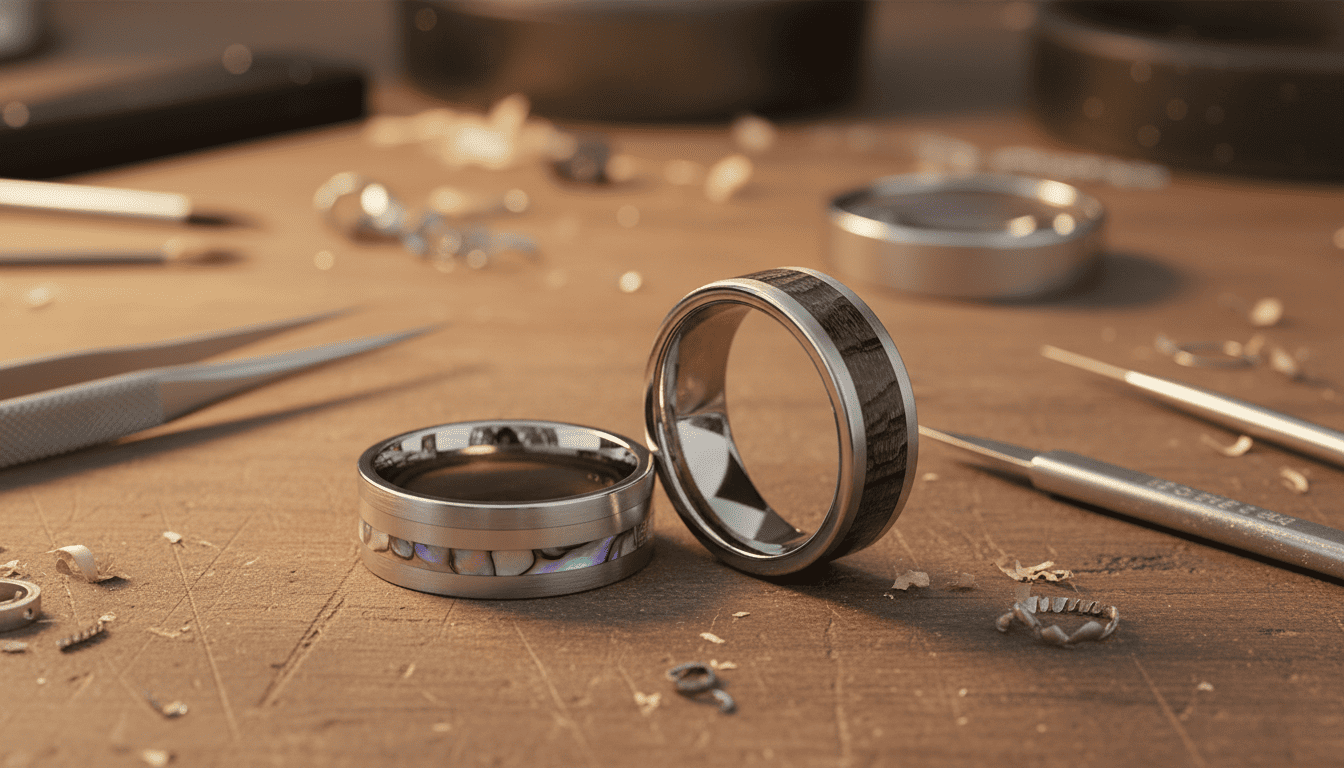
碳化鎢 rings are produced via Powder Metallurgy 和 Sintering, as the material’s extreme melting point prevents traditional casting. This process necessitates CNC-grade diamond cutting to achieve precise dimensions and sharp edges. Because the sintered molecular structure is so rigid, 鎢 rings cannot be resized using traditional expansion tools.
鈦 utilizes Vacuum Ion Plating (PVD) for color and high-speed CNC lathing for shaping the raw alloy rods. Because 鈦 is more ductile, it allows for more intricate textures such as Sandblasting 或 Brushing. In a 12-month longitudinal test, 鈦 rings showed 12% more surface micro-scratches than 鎢.
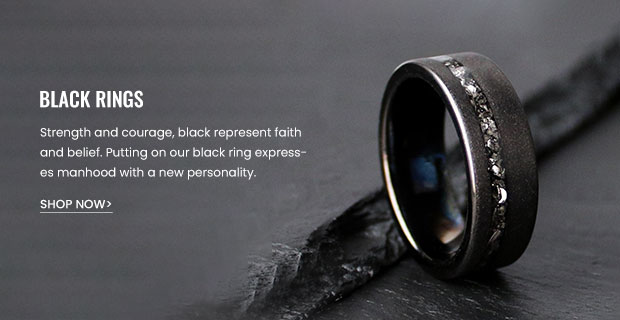
However, they maintained a superior bond with 隕石 或 木材 inlays due to their lower thermal expansion coefficient. This thermal stability ensures that the adhesive bond between the metal host and organic inlay remains intact during extreme temperature fluctuations. The PVD vacuum coating 關於 鈦 also offers a wider spectrum of color options compared to the dark grey native state of 鎢.
Fabrication Limits: Sintered Tungsten requires CNC diamond cutting due to its hardness, whereas Titanium allows for intricate PVD vacuum coating and lathing.
Thermal Stability: Titanium’s low thermal expansion coefficient ensures superior structural bonding for composite meteorite or wood designs.
Emergency Removal and Medical Safety
A critical safety metric is the Emergency Fracture Response. 鎢, despite its hardness, is an inherently brittle material due to its covalent-ionic bonding characteristics. Because of this, in an emergency, a Vice-grip tool can apply external pressure until the ring safely fractures into several clean pieces.
鈦, meeting ISO 5832 medical standards, is extremely tough and non-brittle. It must be removed using a high-speed Diamond-tipped saw or a specialized electric ring cutter. The metal’s high tensile strength means it will resist crushing, which protects the finger from compression injuries.
Fracture Safety: The brittle nature of Tungsten Carbide allows for safe vice-grip fracturing in trauma scenarios.
Biocompatibility: Titanium meets ISO 5832 standards, providing a bio-inert surface that eliminates Nickel (Ni) allergic reactions.
Ethical Sourcing and Craftsmanship
A truly high-performance ring is defined by the transparency of its supply chain. Whether it is ethically harvested Gibeon Meteorite or lab-certified 碳纖維, the craftsmanship must match the quality of the raw elements. Our commitment to artisan-led finishing ensures that every sandblasted 或 brushed surface is applied by hand.
This human touch ensures uniformity that mass-produced machines simply cannot replicate across complex surfaces. The intersection of high-tech PVD coating and traditional hand-finishing creates a product that is both socially responsible and physically superior. Every CNC-cut edge is inspected to ensure a perfect 0.012mm tolerance across the entire production run.
 Conclusion: Engineering the Final Choice
The choice between 鎢 和 鈦 is a trade-off between Surface Indestructibility 和 Structural Resilience. 碳化鎢 offers a permanent, scratch-proof luster due to its interstitial carbon bonding, making it the “forever” choice for surface finish. Grade 5 Titanium offers an aerospace-grade strength-to-weight ratio that prioritizes ergonomic comfort for active lifestyles.
Surface Integrity: Tungsten Carbide is the definitive industrial choice for maintaining a permanent Vickers 1600 luster.
Performance Engineering: Grade 5 Titanium is the medical-grade standard for users requiring ISO-compliant biocompatibility and high-impact resilience.